Law 180 and Puerto Rico’s Primary Residence Tax Exemption
Luxury Real Estate Insights Wow Real Estate Puerto Rico January 13, 2026
Luxury Real Estate Insights Wow Real Estate Puerto Rico January 13, 2026
In December 2025, Law No. 180-2025 was enacted, amending Puerto Rico’s Incentives Code (Act 60-2019). This legislation introduces a capital gains tax exemption on the sale of a primary residence, provided that certain statutory requirements are met.
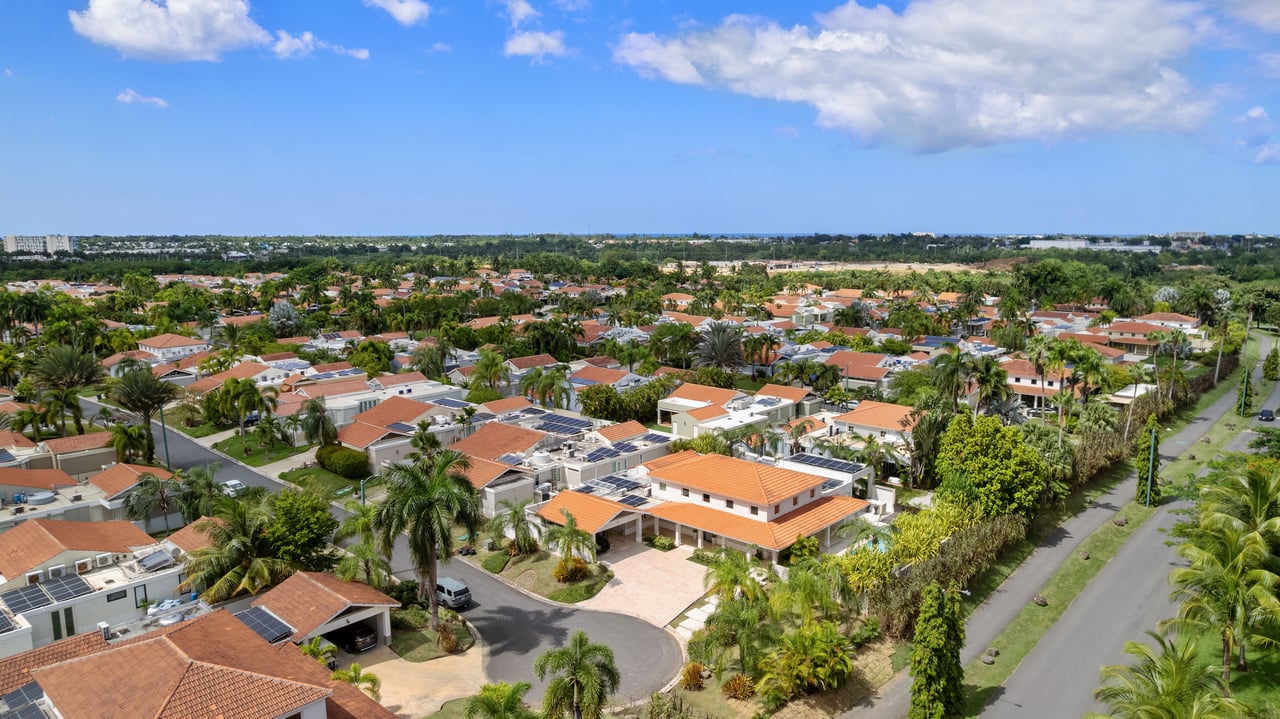
Although this is a tax-related change, its impact is felt directly in the Puerto Rico real estate market, particularly like Condado, Dorado, and Guaynabo, where primary-residence sales often exceed the exemption thresholds.
In real estate, price and market conditions matter—but so does the legal and tax framework. When that framework changes, it is worth taking the time to understand the implications and evaluate possible scenarios carefully.
In general terms, Law 180-2025 provides that, starting with the tax year beginning after December 31, 2024, the capital gain generated from the sale of a property located in Puerto Rico may be exempt from income tax, as long as the property qualifies as the seller’s primary residence and all legal requirements are satisfied.
This law specifically amends Section 6060.05 of Puerto Rico’s Incentives Code.
Simply put, capital gain is the difference between the price at which a property is sold and the price at which it was originally acquired, after considering certain allowable costs.
Illustrative example:
If a residence was purchased for $300,000 and later sold for $1,000,000, the difference of $700,000 could be considered a capital gain.
Historically, that gain was generally subject to a 10% tax, which in this example would amount to approximately $70,000.
Under Law 180-2025, that amount may be fully exempt, provided the property qualifies as a primary residence and all statutory conditions are met.
In our experience, many homeowners are surprised when they clearly understand how much of the sale price actually remains in their hands once taxes and transaction costs are taken into account. This is why changes like Law 180-2025 often open new conversations, even among owners who were not actively planning to sell.
The law establishes specific criteria for a property to qualify as a primary residence eligible for the exemption.
The property must have been occupied by the seller or the seller’s immediate family:
For a minimum of two (2) years within the five (5) years preceding the sale, and
Without being rented, whether short-term or long-term, during that period.
In the case of inherited properties:
The decedent must have occupied the property as a primary residence for the two (2) years prior to death, and
The property must not have been rented after the decedent’s passing.
This capital gains exemption may apply to:
Homeowners selling a property that qualifies as their primary residence, as defined by law.
Sellers who meet the required occupancy and use conditions.
Sales occurring in tax years beginning after December 31, 2024.
Law 180-2025 expressly excludes:
Beneficiaries of tax incentives under Section 2022.02 of the Incentives Code.
Beneficiaries of Act 22-2012 (the Individual Investors Act).
Properties that do not qualify as a primary residence.
Properties that were rented during the relevant qualification period.
👉 Official text of Law No. 180-2025 (PDF):
https://aldia.microjuris.com/wp-content/uploads/2025/12/Ley-180-2025.pdf
In real estate, details matter.
A property’s history, how it has been used over time, and the timing of a sale can make a meaningful difference in the final outcome.
Changes to the tax framework, such as Law 180-2025, often reshape how homeowners evaluate a potential sale. In many cases, understanding this new context allows owners to more clearly assess timing, structure, and net financial results, even when a sale is not imminent.
If you are a homeowner and would like to understand how this new tax framework could influence a potential sale, learn the current market value of your property, or simply discuss possible scenarios, we are available for a confidential conversation from a Puerto Rico real estate perspective.
Many of the best decisions begin with a timely conversation.
This article is for informational purposes only and does not constitute legal or tax advice. We recommend consulting with a licensed tax professional to evaluate individual circumstances.

Guanina Cintrón is the co-founder of Wow Real Estate Puerto Rico and a trusted luxury real estate advisor known for her integrity, vision, and client-first approach. A Certified Luxury Home Marketing Specialist with Million Dollar Guild™ recognition, she provides world-class representation to buyers and sellers of high-value properties across Puerto Rico. Drawing on 17 years of corporate experience and her role as the only Puerto Rico–based member of REALM Global, Guanina offers clients unmatched expertise, global reach, and personalized guidance. Whether representing a beachfront estate, a private community, or a strategic relocation, she is dedicated to delivering seamless results and life-changing experiences.
📍 7 Calle Tobonuco Ste #104-1204, Guaynabo, PR 00968
📞 (787) 642-3304


Stay up to date on the latest real estate trends.



Where to Find Quiet, Secluded Moments Across the City.

How to Invest in Features That Fit Island Living.

As industry leaders in the luxury real estate market in Puerto Rico, we leverage our deep understanding of the local market and our extensive experience in facilitating high-value transactions. Our expertise allows us to develop and execute tailored sales, marketing, and negotiation strategies for our clients. Our ultimate objective is to fulfill their dreams and create a lasting positive impact in their lives.

Guanina Cintrón